
SDG16: The Foundation we cannot afford to neglect
By Léonie Mutoni, Coordinator of The African Centre of Excellence for Access to Justice (ACE-AJ) and Programs Director at Legal Aid Forum, Rwanda
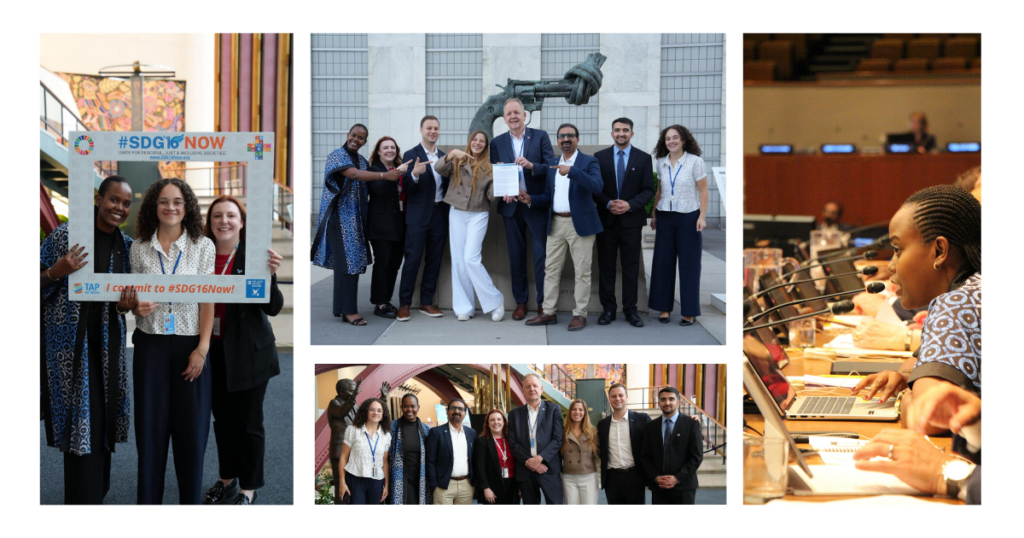
As the international community gathered in New York for the 2026 SDG16 Conference, one message resonated throughout the discussions: sustainable development cannot succeed without peace, justice, and inclusive institutions. At a time when the world is grappling with conflict, shrinking civic space, rising inequality, and declining development financing, the conversations reinforced why SDG16 is not simply one goal among seventeen; it is an enabler of all the others.
This year’s Conference was appropriately framed around driving transformation and coordinated action for sustainable development. Rather than treating governance, justice and peace building as standalone issues, discussions repeatedly demonstrated how investments in accountable institutions, human rights, access to justice, and civic participation create the conditions necessary for progress across the entire 2030 Agenda. The conclusion was consistent: without SDG16, progress elsewhere will remain fragile.
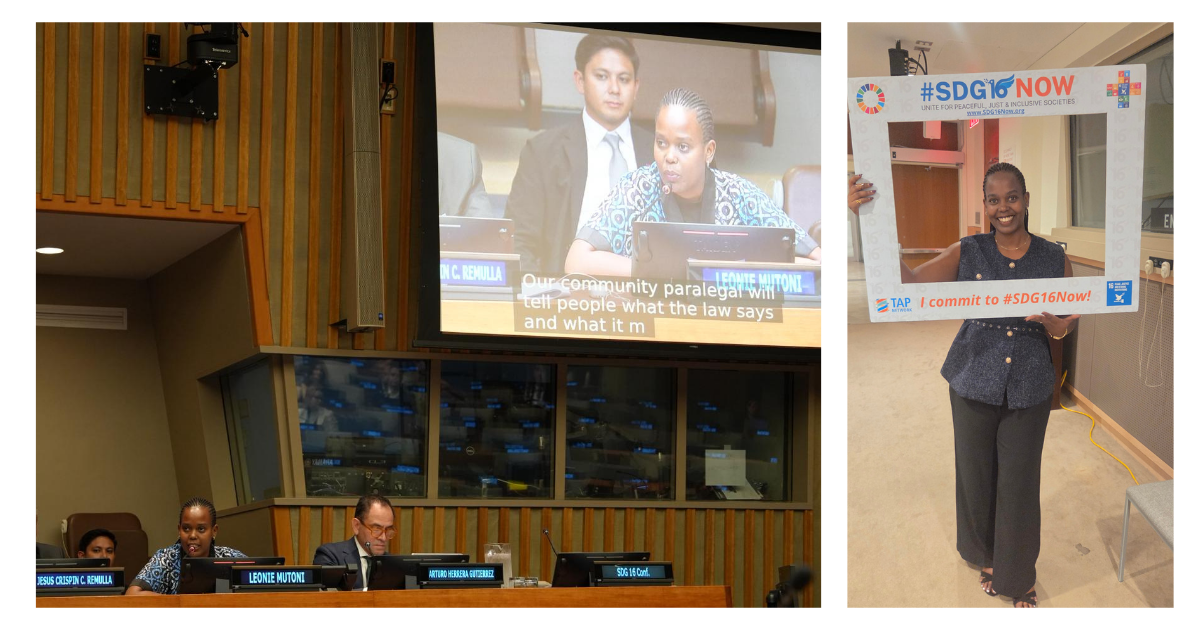
Against that backdrop, I had the opportunity to contribute to the conversations by sharing, during a panel discussion, how community-based dispute resolution and legal empowerment can dramatically scale up access to justice. My intervention sought to make a simple but important point: if we are serious about ensuring equal access to justice for all, we must invest in the justice systems that people actually use.
Drawing on the work of members of the African Centre of Excellence for Access to Justice, I shared practical examples of how community paralegals, local mediators, legal aid providers, and other grassroots justice actors are already delivering justice in ways that are accessible, affordable, and trusted by communities. These approaches not only help resolve disputes more efficiently and cost-effectively, but also reduce the burden on the formal justice system and strengthen social cohesion by empowering communities to address conflicts collaboratively before they escalate.
Perhaps the strongest takeaway for me was how naturally this message aligned with the broader discussions taking place throughout the Conference. If SDG16 is indeed a catalyst for sustainable development, then community-based justice should not be viewed as a peripheral issue within the global justice agenda. It is one of the most practical ways of translating the ambitions of SDG16 into tangible outcomes for communities. Equally encouraging was the strong emphasis on greater collaboration across civil society. In a context of shrinking civic space, declining funding, and increasingly complex global challenges, the discussions reinforced that lasting progress will depend not only on what individual organisations can achieve, but on our ability to work collectively, strengthen partnerships, and advance shared priorities rather than operating in silos.
That spirit was also reflected in the 2026 Civil Society Declaration on SDG16+, launched a day before the Conference during the Civil Society Forum. Developed through consultations with civil society actors around the world, the Declaration calls not only for renewed investment in civic space, people-centred justice, peacebuilding, and locally led solutions, but also for stronger collaboration and coalition-building across sectors to address the shared challenges facing civil society.
Leaving New York, I was left with a renewed conviction that we must continue elevating these conversations in global SDG16 forums. Community-based dispute resolution and legal empowerment should not be treated as complementary initiatives operating at the margins of justice systems. They are fundamental to how access to justice is realised for millions of people every day and deserve to be recognised as an integral part of the global SDG16 agenda.
The encouraging shift is that these approaches are increasingly gaining that recognition. Our task now is to ensure that recognition translates into concrete action. That means embedding community-centred justice more prominently in global and national policy discussions, creating enabling legal and policy frameworks, and providing sustained investment in the community justice actors who make justice accessible, affordable, and trusted.
